M Meshy

3D workflow guide

A practical meshy ai alternative for 3D work

This meshy ai alternative helps you compare prompt-to-model workflows without treating every generator as interchangeable. Use the guide to choose a focused starting point, understand the trade-offs, and move from idea to usable 3D reference.

3
paths compared
6
decision criteria
0
install steps
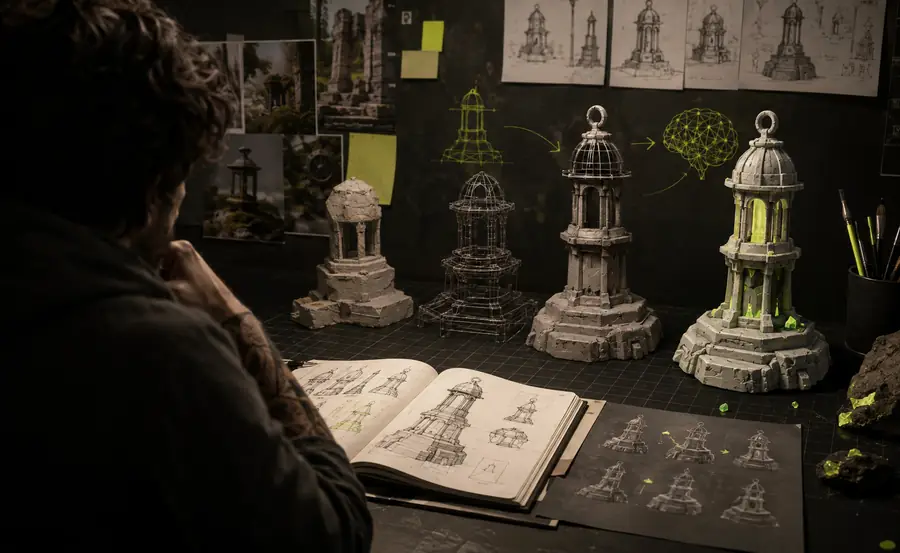
Abstract 3D objects representing alternative AI modeling workflows

Quick comparison

Choose your generation path

The right option depends on whether you want a broad creative workspace, a fast alternative, or a focused route for testing a single concept.

Recommended

Meshy AI

Best for a broad, familiar AI 3D workspace.

Pros

  • Text-to-3D and image-to-3D workflows
  • Useful controls for refining a generated asset
  • Large range of concept and game-art use cases

Cons

  • More settings can slow down a first experiment
  • Results still need cleanup for production use

Tripo AI

Best for quick visual experimentation and direct comparisons.

Pros

  • Fast concept iteration from simple prompts
  • Straightforward workflow for trying multiple ideas
  • Useful when speed matters more than deep controls

Cons

  • Output quality can vary across subjects
  • You may need another tool for detailed refinement

A lightweight alternative workflow

Best when you want a clear brief, one focused test, and a manual review step.

Pros

  • Keeps the decision process simple
  • Works well for references, blockouts, and early ideation
  • Makes quality checks part of the workflow

Cons

  • Not a replacement for a full modeling package
  • Requires manual finishing for topology, scale, and detail

Workflow evolution

How to start

AI 3D generation has moved from novelty demos toward repeatable concept workflows. A simple review loop keeps the technology useful rather than distracting.

  1. Text prompts became a 3D starting point

    Early tools made it possible to turn short descriptions into rough objects, giving artists a faster way to explore silhouettes and themes.

  2. Images joined the workflow

    Image-to-3D features made reference-driven experiments more practical for props, characters, product concepts, and visual studies.

  3. Iteration became the main value

    The strongest workflows began treating generated models as drafts: compare variations, select a direction, then correct shape, scale, and surface details.

  4. Alternatives became more task-specific

    Instead of asking one tool to do everything, creators increasingly choose a generator according to speed, control, input type, and how much cleanup they can handle.

At a glance

The 3 things only this route does

A focused alternative is valuable when it removes unnecessary choices and makes the next action obvious.

Start with one clear subject, style, and intended use.
1 brief
Review silhouette, proportions, and surface detail before keeping a result.
3 checks
No generated asset should skip scale checks or final cleanup.
0 shortcuts
Keep both the selected model and a visual reference of the prompt direction.
2 outputs

Honest limits

Limits

No AI 3D generator removes the need for judgment. Know what this route cannot guarantee before it becomes part of a larger pipeline.

It cannot guarantee production-ready topology

A generated mesh may contain uneven density, awkward edge flow, hidden geometry, or forms that are difficult to edit.

WorkaroundTreat the output as a blockout or retopologize it in a conventional 3D tool.

It cannot infer every design constraint

A prompt rarely captures exact dimensions, articulation, manufacturing rules, rigging needs, or a studio's style guide.

WorkaroundAdd measurements and references to the brief, then verify the result manually.

It cannot replace material and lighting decisions

Textures and surface suggestions can support a concept, but they may not match the final shader, UV, or rendering requirements.

WorkaroundUse the generated look as a reference and rebuild important materials for the target scene.

It cannot make every subject equally well

Organic props, hard-surface objects, repeated patterns, and unusual silhouettes can produce very different levels of consistency.

WorkaroundTest a small sample first and keep a conventional modeling path available.

Side-by-side view

This entry point vs the general one

Compare a focused alternative workflow with Meshy AI as the broader reference point. Neither choice is universally best; the task determines the fit.

Focused alternative workflow Meshy AI
1

Best starting point

Focused alternative workflow

One defined concept or visual study

Meshy AI

A wider range of AI 3D experiments

2

Learning curve

Focused alternative workflow

Low when the brief is already clear

Meshy AI

Moderate because more controls may be available

3

Prompt flexibility

Focused alternative workflow

Works best with concise, structured prompts

Meshy AI

Supports broader creative exploration

4

Iteration style

Focused alternative workflow

Compare a few deliberate variations

Meshy AI

Explore multiple generation and refinement paths

5

Production readiness

Focused alternative workflow

Requires manual cleanup and validation

Meshy AI

Also requires cleanup; tools do not remove pipeline work

6

Ideal output

Focused alternative workflow

A useful blockout, reference, or direction

Meshy AI

A broader draft asset for continued refinement

Decision guide

Its own FAQ

The most common comparison is less about a universal winner and more about which workflow matches your next decision.

1

What is better, Meshy AI or Tripo AI?

Meshy AI is usually the broader choice for exploration and refinement, while Tripo AI can be attractive for fast, direct concept tests.

Choose based on the controls you need, the kind of input you have, and how much cleanup the final asset will receive.

2

Should I choose an alternative for every project?

No. Use an alternative when it makes a specific task faster or clearer; keep Meshy AI or another broad tool when you need more room to explore.

A small test with your own prompts is more reliable than assuming one generator wins across every subject and pipeline.